Study Skills System: Focus, Memory, and Exam Prep
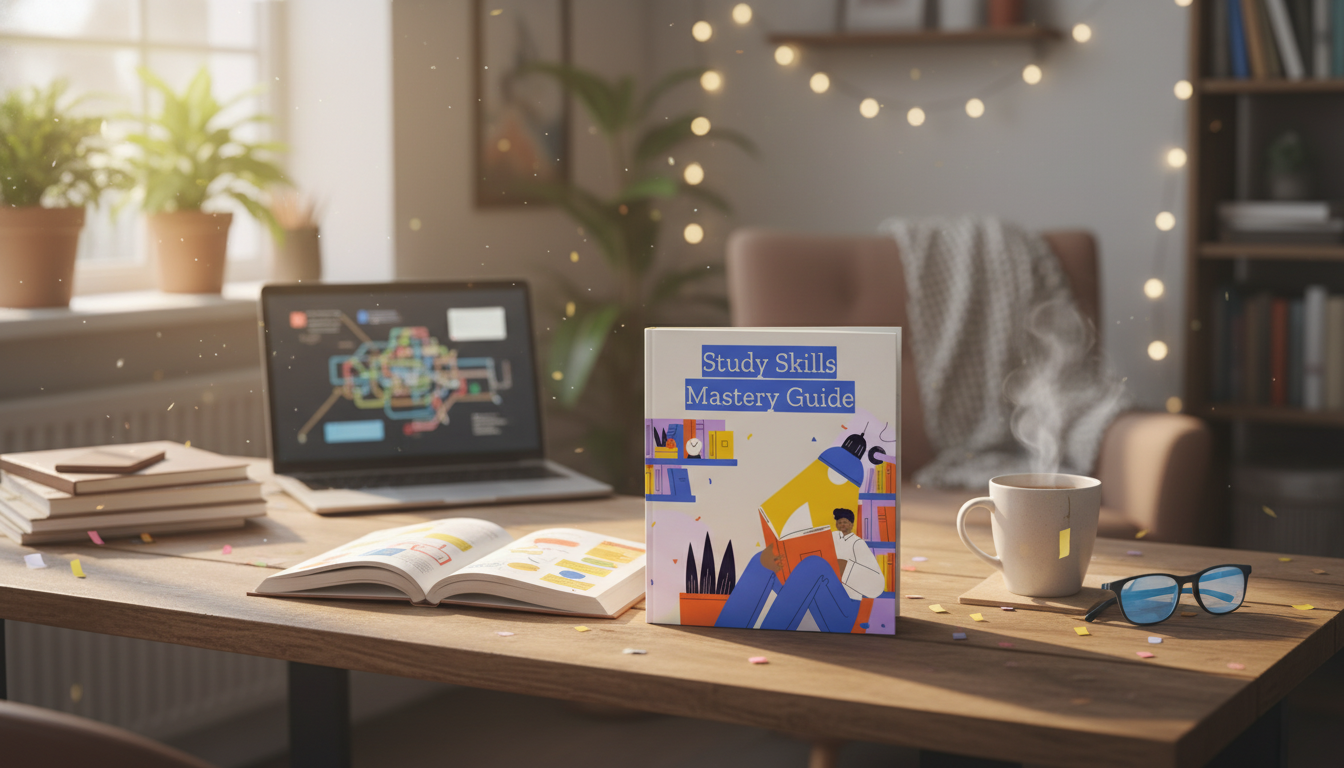
Study Skills Mastery Guide: A Practical System for Focus, Memory, and Consistent Results
Strong study habits aren’t about studying longer—they’re about using a repeatable system that protects focus, improves recall, and makes progress visible. The goal is to show up to each session knowing exactly what to do, learn efficiently while you’re there, and leave with proof you’re getting better (not just “spending time”). Below is a practical routine for planning sessions, learning faster, remembering more, and checking readiness before an exam—built to fit real schedules.
What “study skills” really include (and what most students miss)
“Study skills” isn’t one trick—it’s a set of behaviors and methods that work together. When one piece is missing, students often compensate by re-reading longer or cramming later.
- Focus management: controlling distractions, energy dips, and task-switching so study time stays effective.
- Learning strategies: picking the right method for the subject (retrieval practice, spaced repetition, elaboration).
- Memory techniques: encoding (making meaning), storing (spacing), and retrieving (testing) information.
- Study workflows: turning assignments into steps, not vague goals like “study Chapter 4.”
- Review and self-check: finding weak areas early instead of discovering them during the exam.
Research consistently supports strategies like practice testing and spaced practice over passive review for durable learning (Dunlosky et al., 2013).
Set up a weekly plan that doesn’t collapse by Wednesday
A study plan fails when it’s built on motivation instead of structure. A lighter, repeatable plan beats an intense schedule you can’t sustain.
- Start with fixed commitments (classes, work, sports, family obligations), then place study blocks around them.
- Break deadlines into “next actions” (read 10 pages, do 15 problems, draft an outline) rather than “study Chapter 4.”
- Use a simple rotation: new material early week, consolidation midweek, self-testing and mock tasks near the end.
- Build in small buffers: 15–30 minutes between blocks prevents spillover from wrecking the day.
Example weekly study rhythm (adjust to workload)
| Day | Primary goal | Best study method | Quick check |
|---|---|---|---|
| Mon | Learn new concepts | Active notes + short retrieval | Write 5 questions from memory |
| Tue | Practice skills | Problem sets / application | Mark errors by type |
| Wed | Reinforce memory | Spaced repetition + flashcards | Teach-back in 3 minutes |
| Thu | Integrate topics | Mixed practice (interleaving) | Mini-quiz without notes |
| Fri | Identify weak spots | Targeted drills | Redo missed items correctly |
| Sat | Simulate exam tasks | Timed practice | Score + reflect on strategy |
| Sun | Reset and plan | Light review + planning | List top 3 priorities for next week |
A focused study session: the 10-minute start that prevents procrastination
Most procrastination is a “starting problem,” not a “working problem.” Use a 10-minute startup that lowers friction and creates momentum.
- Define one outcome: “Finish 12 questions” beats “study math.”
- Remove friction: open only what you need, silence notifications, clear the workspace.
- Use a short ramp-up: 2 minutes preview, 6 minutes work, 2 minutes recap—then continue if momentum is good.
- Time box realistically: 25–45 minutes for most tasks; shorter blocks for heavy reading.
- End with a bookmark: write the exact next step so restarting is easy.
If you want a calmer pre-study routine (especially before longer sessions), a guided journaling warmup can reduce mental clutter. Mindful Clarity: Journal & Prompts for a calmer pre-study routine is a printable option you can use for a 3–5 minute reset.
Study methods that improve learning speed (without re-reading)
Re-reading feels productive because it’s familiar. The faster route is to make your brain retrieve and apply information—slightly uncomfortable, but far more effective.
- Retrieval practice: close the book and recall key ideas, then check and correct. (Active recall is tied to how memory is strengthened through retrieval pathways; see OpenStax Psychology 2e.)
- Spaced repetition: review the same content across days rather than one long session.
- Interleaving: mix related problem types so you learn when to use each method, not just how to do one pattern.
- Elaboration: connect facts to “why,” examples, and prior knowledge to deepen encoding.
- Dual coding: combine words with simple diagrams, timelines, or concept maps.
Memory techniques that work during real exams
Exam-day memory is less about “hoping you remember” and more about training retrieval under conditions that resemble the test.
- Chunking: group items into meaningful sets (process steps, categories, patterns).
- Mnemonics: use acronyms, quick stories, or location-based memory for sequences.
- Generation: attempt an answer before looking it up; the effort strengthens recall.
- Error logs: track mistakes and their cause (concept gap, misread question, rushing) to prevent repeats.
- Sleep and recall: short reviews before sleep and quick retrieval the next day can improve retention through memory consolidation (National Institutes of Health).
A simple study checklist for exam readiness
Use this checklist 3–10 days before a test so you can adjust while there’s still time.
- Can key terms and formulas be recalled without notes?
- Can problems be solved under mild time pressure?
- Are mistakes decreasing across two separate sessions (not just one)?
- Can a one-page summary be created from memory, then corrected using notes?
- Is the toughest topic scheduled for at least two more retrieval sessions before the test?
Using a digital study guide to stay consistent
If you want a ready-made structure, Study Skills Mastery Guide (digital study guide and checklist PDF) is built around actionable steps for planning, focused sessions, retention, and pre-exam self-checks.
Study Skills Mastery Guide: what it includes and who it’s for
FAQ
What is the 7 3 2 1 study method?
It’s a simple countdown routine: 7 days out, set your plan and gather materials; 3 days out, focus on retrieval practice and weak spots; 2 days out, do mixed/timed practice; 1 day out, keep it light and prioritize rest. If your exam is closer or farther away, compress or extend the timeline while keeping the same sequence.











Leave a comment