Global Travel Etiquette eBook: Culture-Smart Manners
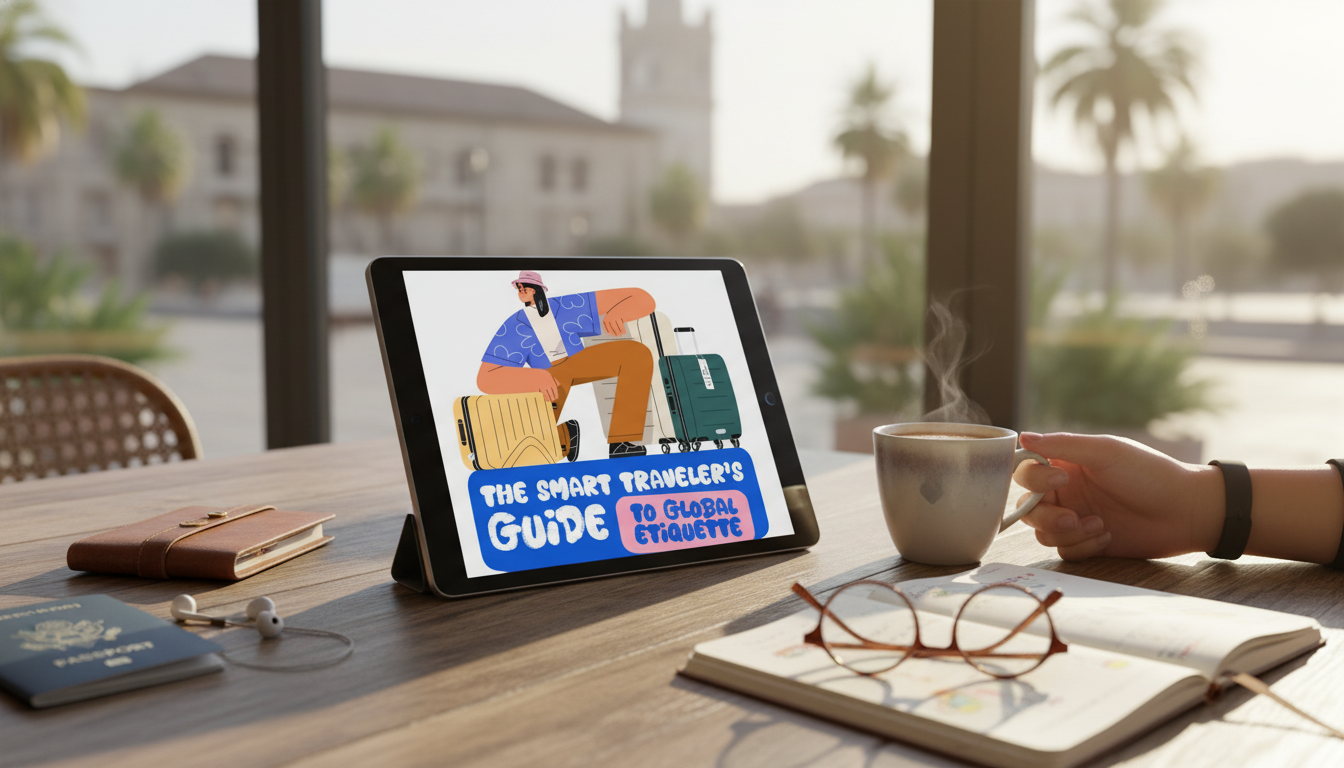
The Smart Traveler’s Guide to Global Etiquette: Cultural Tips, Travel Etiquette, and International Manners (Digital Download)
Small gestures can determine whether a trip feels effortless or uncomfortable. Global etiquette isn’t about memorizing hundreds of rules—it’s about recognizing that “normal” changes across borders, and having a practical way to respond when you’re unsure. The result is smoother conversations, fewer awkward moments, and a travel style that feels respectful in everyday situations: greeting someone new, dining out, visiting a home, navigating public spaces, or showing up for a formal meeting.
What “global etiquette” really covers
Good travel manners sit at the intersection of culture, context, and common sense. The key is knowing what’s flexible and what’s not.
- Manners vs. customs vs. laws: Customs and manners are often optional but meaningful; laws and regulations can create serious trouble. Before you go, review official updates from the U.S. Department of State.
- Context changes everything: The expectations in a business meeting may differ from a homestay, religious site, nightlife district, or crowded train platform.
- The “observe–ask–mirror” approach: Observe what locals do, ask a simple polite question when appropriate, then mirror the most conservative version of what you see.
- Recovering gracefully: When you miss a cue, keep your apology brief, calm, and respectful. Avoid making the other person comfort you; adjust immediately and move forward.
Fast-start etiquette checklist for any destination
Use this as a quick reset after landing—or before you walk into any new environment.
- Greetings: Handshakes, bows, cheek-kisses, and nods vary widely. When in doubt, pause and let the other person initiate the style and distance.
- Personal space and touch: Friendly at home can feel intrusive elsewhere. Keep touch minimal until you see what’s normal locally.
- Dress expectations: Climate matters, but culture often matters more—especially for religious sites, rural communities, and formal venues. Notice shoes-off homes and modesty cues.
- Voice, volume, and gestures: “Indoor voice” isn’t universal. Also, some common hand gestures can be offensive in certain places; keep gestures simple and neutral.
- Photography and privacy: Ask before photographing people, avoid sensitive sites, and be extra cautious with children. Some locations have restrictions or strong norms even when it’s technically allowed.
Dining and hospitality manners that prevent awkward moments
Meals are where travelers often feel the most pressure—yet a few practical habits cover most scenarios.
Quick etiquette cues by situation (use as a pre-trip refresher)
| Situation | Do | Avoid |
|---|---|---|
| Meeting someone new | Let the local person set the greeting style; use titles until invited otherwise | Assuming first-name basis or initiating hugs/touch |
| Entering a home | Ask about shoes and where to place them; accept offered refreshments if appropriate | Wandering into private rooms or refusing hospitality abruptly |
| Restaurant dining | Check if service is included; follow the host’s lead on ordering and starting | Overtly critiquing local food or pressuring others to drink |
| Religious or sacred sites | Dress modestly; observe posted rules; keep voices low | Flash photography, loud conversations, or casual poses at memorials |
| Markets and bargaining | Be friendly; negotiate respectfully; walk away politely if price doesn’t work | Mocking prices or treating bargaining as a confrontation |
Communication across cultures: tone, indirectness, and saving face
- Direct vs. indirect: “No” may appear as hesitation, vague language, or a soft alternative. Pay attention to body language and repeated non-answers.
- Politeness strategies: Softeners (“Could you possibly…?”), honorifics, and respectful silence can carry more weight than fast, efficient phrasing.
- Queueing and public courtesy: Lines, boarding patterns, and personal space norms differ. When it’s unclear, follow the flow and avoid policing others.
- Conflict prevention: De-escalate with calm facial expressions, open hands, and short phrases like “Sorry about that” or “No problem—my mistake.”
- Translation tools: Use short sentences, avoid slang, confirm understanding, and show the screen when needed. For health planning and travel updates, check the CDC Travelers’ Health guidance.
Money, gifts, and gratitude
Business and formal settings while traveling
Digital download overview: what the eBook helps with
The Smart Traveler’s Guide to Global Etiquette (Digital Download eBook) is designed as a portable reference for the moments that tend to trip people up—greetings, dining, public behavior, and respectful travel habits. It also encourages a culture-first mindset so you can reduce friction without overthinking every interaction.
For travelers who want a broader “everyday politeness” refresh beyond travel, pair it with the Modern Etiquette Micro-Course (Printable Digital Etiquette Guide). And if travel makes you feel mentally scattered, the Mindful Clarity: Journal & Prompts (Printable Journal) can help you stay grounded before and during your trip.
Who this guide suits best
Tips for using the guide before and during a trip
FAQ
Is a digital download eBook suitable for travel compared to a printed book?
Yes—saving it to your phone or tablet makes it easy to search quickly and review right before a meal, meeting, or tour. If you download it for offline access, it can still be useful when you have limited connectivity.
Does etiquette guidance apply the same way in every country?
No. Norms vary by region and even by setting within the same destination, so adaptable habits (observe, ask politely, and follow the host’s lead) are more reliable than one-size-fits-all rules.
What should be done if an etiquette mistake happens while abroad?
Offer a brief, sincere apology, avoid over-explaining, and adjust your behavior immediately. A calm tone and a willingness to learn typically smooth things over faster than trying to justify the mistake.









Leave a comment