Reading to Reduce Stress: A Simple Calm-Down Routine
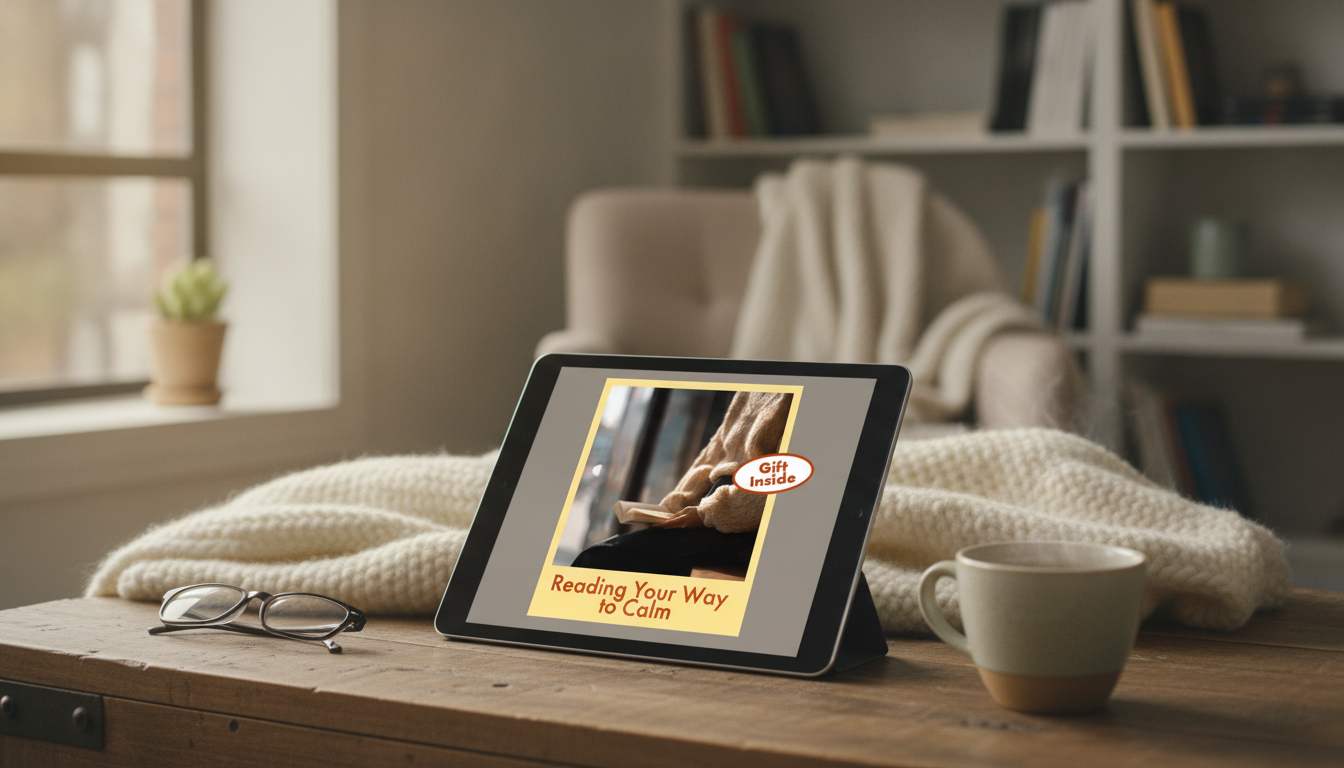
Reading can act like a mental reset: attention narrows, the body downshifts, and worries lose some volume. The effect is strongest when the reading experience is set up to be easy, immersive, and consistent—especially in a world of constant notifications. This guide breaks down why reading helps, what to read when stress is high, and how to build a simple routine that fits real life.
Why stress sticks—and why books help
Stress tends to linger when the brain stays in threat-scanning mode. Rapid context-switching, rumination, and constant input keep the nervous system activated and make it harder to feel “done” with anything. That’s one reason stress can feel louder after an evening of endless scrolling: there’s no clear ending, and the mind keeps searching for what matters next.
Books offer a different kind of attention. Reading creates a single, structured stream of information, reducing the cognitive load of juggling multiple stimuli. Immersive narratives can shift attention away from self-focused worry toward external scenes and characters, interrupting repetitive thought loops. Even the predictability of a book—beginning, middle, end—can feel stabilizing compared with feeds designed to keep going.
What happens in the mind and body during calming reading
When reading feels soothing, attention anchors. Sustained focus can lower perceived overwhelm by replacing fragmented input with one steady task. As engagement increases, breathing and muscle tone often soften—especially when the pacing is slower and posture is comfortable.
Reading can also support emotional regulation. Stories and essays can encourage reappraisal—seeing problems from new angles—or create psychological distance, where difficult feelings are held a bit more gently. And when reading becomes consistent at night, it can work as a reliable pre-sleep cue, especially with dim light and a predictable bedtime window.
Common stress symptoms and how reading can counter them
| Stress response | How it shows up | Reading approach that can help | Best timing |
|---|---|---|---|
| Racing thoughts | Looping worries, difficulty concentrating | Short chapters, clear structure (essays, light fiction) | Micro-breaks (5–15 min) |
| Overstimulation | Irritability after heavy screen time | Print or e-ink reading; gentle pacing | After work/school transition |
| Tension and restlessness | Fidgeting, tight shoulders | Audiobook + slow walk; or seated reading with body scan pauses | Late afternoon/evening |
| Low mood | Hopelessness, reduced motivation | Comfort reads, humorous writing, uplifting memoir | When energy is lowest |
| Poor sleep onset | Can’t “switch off” at night | Familiar genres, low-stakes plots, dim environment | 30–60 min before bed |
If stress feels intense or persistent, it can help to recognize the broader pattern: chronic stress affects both mind and body, including sleep, mood, and concentration. For a clear overview of stress symptoms and causes, see the Mayo Clinic’s guide. For how stress shows up physically, the American Psychological Association breaks down common effects.
Choosing the right book when stress is high
On high-stress days, “better” books are often the ones that match capacity. If attention is thin, a twisty epic may feel like work; a low-conflict series or a familiar author can feel like relief. The goal isn’t to impress yourself—it’s to make absorption easy.
- Match intensity to capacity: choose low-stakes plots, gentle pacing, or humor when nerves are already taxed.
- Prefer clarity over novelty: predictable structures (series, cozy mysteries, essays) reduce decision fatigue.
- Build a comfort shelf: keep 5–10 titles (or authors) that reliably feel safe and absorbing.
- Avoid common pitfalls: dense self-help, heavy trauma narratives, or contentious topics can increase arousal when you’re already keyed up.
If you want practical, everyday stress-reduction ideas alongside reading, the NHS stress tips can be a helpful checklist for small changes that add up.
How to Choose: a stress-relief reading format (print, e-ink, phone, audio)
The “best” format is the one that reduces friction and interruptions. A calming reading setup usually has two features: fewer alerts and fewer decisions. Start by choosing the format you can access consistently, then make one small tweak that protects your attention.
Format decision guide for calmer reading
| Format | Best for | Watch-outs | Simple setup tip |
|---|---|---|---|
| Bedtime, deep immersion | Needs a light source | Keep the book visible on a nightstand | |
| E-ink | Low-glare, adjustable text | Can still be stimulating if content is intense | Use warm front-light and larger font |
| Phone/tablet | Always-available reading | Notifications, temptation to switch apps | Enable Focus/Do Not Disturb and full-screen reading |
| Audio | Restlessness, multitasking, gentle movement | Easy to zone out if too tired | Choose 0.9–1.0x speed and set a sleep timer |
A simple routine that turns reading into a reliable reset
A calming reading habit doesn’t need long sessions. What matters is repeatability: a short practice that happens often enough for your brain to recognize it as a downshift.
When reading doesn’t feel calming (and what to do instead)
FAQ
How long does it take for reading to reduce stress?
Effects can show up within minutes when reading is immersive and interruptions are minimized. Consistency matters more than duration, so a daily 10-minute session often helps more than sporadic long stretches.
Is fiction or nonfiction better for calming down?
Fiction often makes it easier to get absorbed and step away from self-focused worry. Nonfiction can be calming too when it’s reassuring and easy to follow, so the best choice is what feels safest and least demanding that day.
Can reading on a phone still help with stress?
Yes—especially if notifications are silenced and the reading experience stays full-screen in a dedicated app. A clear boundary (like a timer or chapter endpoint) helps prevent drifting into app-switching or doomscrolling.











Leave a comment