Fast Stress Relief: Breathing, Grounding, and Calm
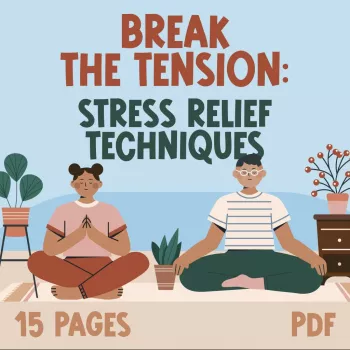
Break the Tension: Fast, Practical Ways to Calm the Body and Clear the Mind
Stress can build quickly—tight shoulders, shallow breathing, racing thoughts, and an endless to-do list. The most effective relief usually combines two tracks: calming the nervous system in the moment and reducing the pressure points that keep stress returning. The techniques below are designed to be simple, repeatable, and usable anywhere: breathing resets, short meditations, grounding skills, and time strategies that make life feel more manageable.
If you want a guided, printable set of tools you can keep on your phone or desk, Break the Tension: Stress Relief Techniques pulls these methods into an easy routine you can revisit when stress hits.
Recognize the early signs of tension
Stress is easier to interrupt early than late. A quick scan helps you switch from “I’m stressed” (vague) to “My jaw is clenched and my thoughts are looping” (actionable).
Common cues to watch for
- Body cues: clenched jaw, tight chest, headaches, stomach fluttering, restless legs, shallow breaths, sweaty palms.
- Mind cues: catastrophizing, irritability, difficulty focusing, looping thoughts, feeling behind even after finishing tasks.
- Behavior cues: snapping at others, procrastination, over-checking messages, stress snacking, trouble falling asleep.
Quick check-in (30 seconds)
Rate your tension from 0–10, then name one physical sensation (example: “tight throat” or “pressure behind eyes”). This tiny step makes the problem concrete—and easier to address.
Breathing exercises that work in 1–3 minutes
Breathing is one of the fastest ways to shift stress physiology because it directly influences arousal. Keep the goal simple: smoother breathing, softer shoulders, and a longer exhale than inhale.
| Technique | Time | Best for | How to do it (short) |
|---|---|---|---|
| Physiological sigh | 30–60 sec | Sudden spikes of anxiety | Two-part inhale, long slow exhale; repeat 3–5 rounds |
| Box breathing | 2–3 min | Racing thoughts, shaky focus | Inhale-hold-exhale-hold in equal counts (e.g., 4-4-4-4) |
| Extended exhale | 1–2 min | Tight chest, irritability | Inhale 4, exhale 6–8; keep exhale smooth |
| 5-4-3-2-1 grounding | 1–2 min | Overwhelm, spiraling | Name 5 see, 4 feel, 3 hear, 2 smell, 1 taste |
| One-task sprint | 10 min | Feeling behind | Choose one small task, remove distractions, work until timer ends |
1) Physiological sigh (30–60 seconds)
Inhale through your nose, then “top up” with a short second inhale. Exhale slowly through your mouth. Repeat 3–5 rounds to downshift quickly. If you feel lightheaded, reduce intensity and return to normal breathing.
2) Box breathing (2–3 minutes)
Inhale for 4, hold for 4, exhale for 4, hold for 4. Keep it gentle—if you feel strained or dizzy, use smaller counts (like 3-3-3-3).
3) Extended exhale (1–2 minutes)
Inhale for 4 and exhale for 6–8. The magic is in the ease: relaxed shoulders, soft belly, and a smooth exhale rather than a forced “deep breath.”
Desk-friendly reset (15 seconds before you start)
Place both feet flat, unclench your tongue from the roof of your mouth, and exhale fully first. Then begin any breathing pattern above for a cleaner restart.
Quick meditations for busy moments (2–7 minutes)
Short meditations work best when they’re repeatable. Think “frequent and doable,” not “perfect and long.” For evidence-based context on mindfulness and safety, see the NCCIH guide to meditation and mindfulness.
Two-minute “arrive” practice
Sit or stand still. Feel the weight in your feet. Notice three sounds. Then return attention to your next breath. When the mind wanders (it will), gently come back.
Body scan (5 minutes)
Move attention from forehead to jaw, shoulders, chest, belly, hands, and legs. On each exhale, soften one area—especially where you tend to brace.
Labeling thoughts (3 minutes)
When a thought appears, label it (“planning,” “worrying,” “remembering”), then return to breathing. This creates space between you and the mental noise.
Micro-compassion (2 minutes)
Place a hand on your chest, inhale gently, exhale slowly, and repeat a supportive phrase such as, “This is hard, and it will pass.”
Grounding techniques to stop spirals and reconnect to the present
Grounding is about re-anchoring attention in what’s real right now—especially when your mind is sprinting into worst-case scenarios.
5-4-3-2-1 sensory scan
Temperature shift (10–20 seconds)
Muscle release (60 seconds)
Orientation (20 seconds)
Time management tips that reduce stress at the source
Stress relief sticks longer when you reduce the triggers that keep reloading your nervous system. For practical guidance on coping and daily stressors, the CDC’s coping with stress resources and the APA’s stress overview are helpful starting points.
A simple daily plan: combine fast relief with lasting change
Helpful tools to keep you consistent
- Break the Tension: Stress Relief Techniques (digital guide) for fast breathing resets, grounding scripts, and simple planning frameworks.
- Mindful Clarity: Journal & Prompts (printable journal) for daily reflection that helps clear mental clutter and track what actually reduces your stress.
When to get extra support
FAQ
What is the fastest breathing technique to calm down right now?
The physiological sigh is one of the quickest options: inhale through the nose, take a short second “top-up” inhale, then exhale slowly through the mouth for 3–5 rounds. Keep it gentle and ease up if you feel lightheaded.
How long should a quick meditation be to help with stress?
Even 2–7 minutes can help, especially when practiced consistently. A simple choice is the two-minute “arrive” practice or a short body scan focused on softening tension on each exhale.
What grounding technique works best when thoughts are spiraling?
Try 5-4-3-2-1 (five things you see, four you feel, three you hear, two you smell, one you taste), then add orientation: say the day, where you are, and one safe next action. If the mind spins back up, repeat the sequence once more at a slower pace.










Leave a comment