15-Min Forest Bathing Checklist for a Calm Reset
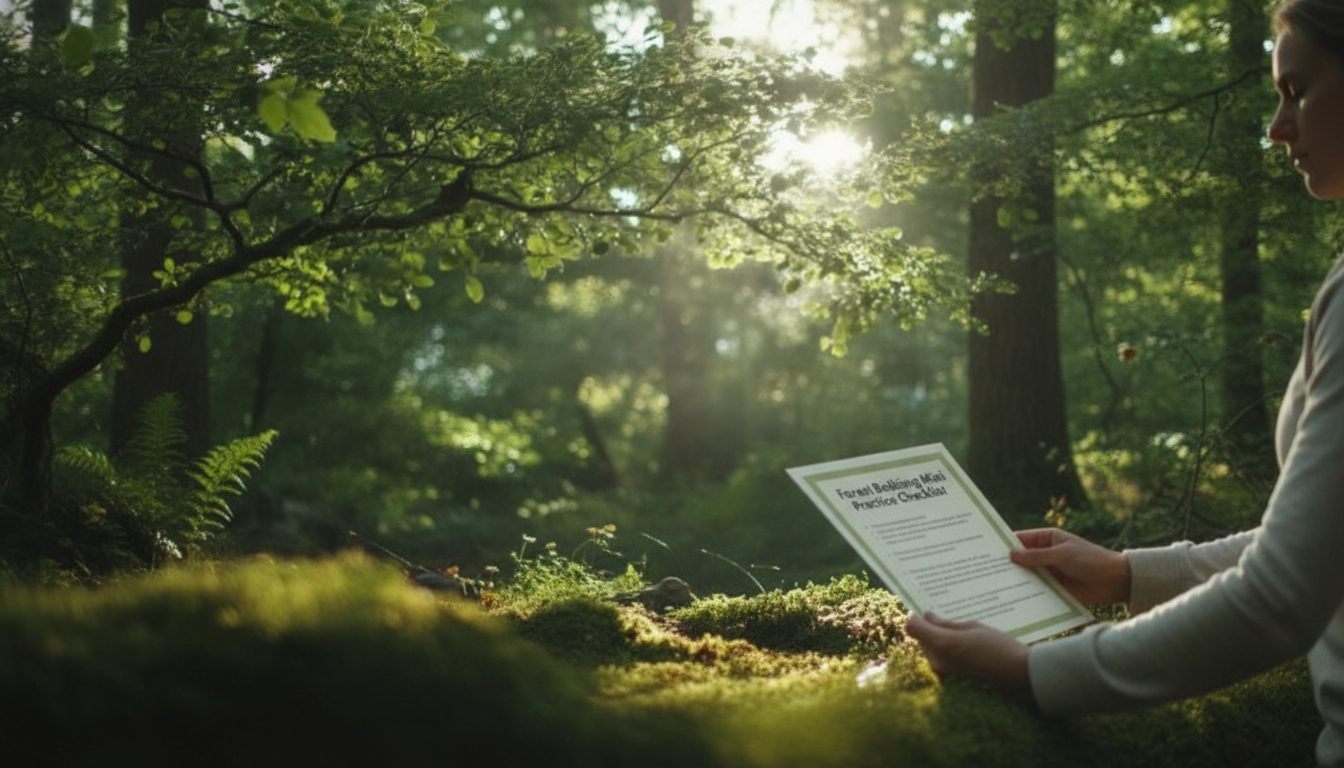
Forest Bathing Mini Practice Checklist: A Mindful Nature Escape
Forest bathing is a slow, sensory way of spending time outdoors that emphasizes noticing rather than doing. A simple checklist makes it easier to arrive, settle the nervous system, and leave feeling restored—without turning the experience into a rigid routine. Use the structure below to create a calm, repeatable mini escape in a park, greenway, backyard, or woodland trail.
What forest bathing is (and what it isn’t)
Forest bathing is a mindful nature practice centered on the senses: seeing, hearing, smelling, and touching (and sometimes tasting) what the landscape offers. The goal is presence—letting the environment meet you where you are.
It’s different from hiking for distance, fitness goals, or “getting your steps in.” The pace is intentionally slow, with frequent pauses that give your attention time to land. A “mini” session can be 15–30 minutes, while longer sessions (60–120 minutes) may allow deeper settling but aren’t required to feel a shift. A good session ends with feeling more present, not more accomplished.
If you want a broader look at evidence-based stress approaches that often pair well with time outdoors, the National Center for Complementary and Integrative Health (NCCIH) offers a clear overview of mind-body practices.
How to Choose a checklist that fits your life
The “best” forest bathing checklist is the one you’ll actually use—gently, repeatedly, and without friction. Consider these filters before printing anything out or saving prompts to your phone:
- Length: Pick a format that matches real availability (10–15 minutes on weekdays; 30–60 minutes on weekends). Consistency matters more than duration.
- Structure: Look for clear phases (arrive, sensory exploration, reflection, closing) so the session feels complete and not abrupt.
- Prompts: Choose language that invites curiosity (“notice,” “explore,” “listen”) instead of performance (“achieve,” “maximize”).
- Flexibility: The best checklist works in many settings—urban trees, botanical gardens, riversides, or a quiet street with greenery.
- Accessibility: Ensure options for seated practice, mobility aids, and short loops; include alternatives for scent sensitivity or allergies.
- Output style: Some people prefer a printable one-page list; others prefer phone-friendly prompts. Choose what reduces friction.
Set up a mindful nature escape in 5 minutes
Think of setup as “clearing a small landing zone” for attention. You’re not planning an event; you’re making it easy to begin.
- Pick a place with at least a few living elements (trees, shrubs, grasses, water, birds) and a relatively safe, comfortable path or seating spot.
- Choose a time window and a gentle intention (“downshift,” “regulate,” “reset attention”). Keep it simple.
- Silence or soften notifications; consider airplane mode if that feels safe and practical.
- Bring only what supports ease: water, layers, sun/rain protection, and any needed medications. Keep hands free when possible.
- Decide a boundary: a loop, a bench-to-bench route, or a “wander zone” with a clear end time.
If stress has been running high, it can help to remember that the basics—breathing, attention, and routine—are often the most reliable. The American Psychological Association (APA) shares practical stress-management guidance that complements short, consistent nature breaks.
Mini practice checklist: a gentle sequence to follow
This sequence is designed to feel like a soft arc: arrive, sense, pause, and close. If you miss a step, nothing breaks—just rejoin wherever you are.
| Phase | Time | What to do | If distracted, try |
|---|---|---|---|
| Arrival | 2–3 min | Grounding + 3 slow breaths | Feel feet; name one thing you see |
| Orientation | 2 min | 5 colors, 4 shapes, 3 textures | Widen gaze; soften shoulders |
| Listen | 3 min | Near sounds → far sounds | Count 10 sounds without judging |
| Smell | 1–2 min | Notice air, earth, plant notes | Exhale longer than inhale |
| Touch | 3 min | Bark/stone/wind contact | Rub hands; feel warmth/tingle |
| Attention steps | 3–5 min | Walk slowly, pause often | Name: step…step…pause |
| Detail pause | 2 min | One small wonder | Describe it silently in 3 words |
| Closing | 2 min | Gratitude + transition cue | Choose one takeaway to carry home |
Optional cue words (if you like a little guidance)
Make it work anywhere: urban, backyard, or deep woods
Safety, etiquette, and accessibility
- Safety first: Stay on permitted paths, check local conditions, and let someone know your location if going alone.
- Tick and sun care: Use appropriate repellent and clothing; do a brief check after returning home in high-risk areas.
- Respect wildlife and plants: Observe without feeding or picking; keep a calm distance and avoid startling movements.
- Leave no trace: Carry out trash, avoid loud music, and share narrow trails with courtesy. The National Park Service guide to Leave No Trace is a helpful refresher.
- Accessibility options: Seated sensory practice, shorter loops, frequent rests, and using a cane/trekking pole without pressure to “keep up.”
- Emotional safety: If the outdoors feels activating, choose a familiar location and keep sessions brief, ending with a grounding closing cue.
After the walk: simple integration that keeps the benefits
FAQ
How long should a forest bathing session be to feel restorative?
A mini reset often takes 15–30 minutes, especially when you slow down and pause frequently. If you have more time, 60–120 minutes can allow deeper settling, but the pace—not the duration—is the main driver.
Do headphones or guided audio help, or do they defeat the purpose?
Nature sounds are usually the best “guide,” so continuous audio can mask what’s happening around you. Gentle, occasional prompts can help beginners; try both approaches and keep whatever supports presence.
What if the weather is bad or the only option is a noisy city park?
Shorten the session and lean into what the conditions offer: sheltered listening to rain, noticing wind and temperature, or focusing on micro-nature like bark patterns and new leaves. In noisy areas, practice sound layering by attending to near sounds first and letting traffic become background.











Leave a comment