Enrich Your Cat While You’re Away: Easy Solo Ideas
How can I enrich my cat when not home?
When you’re out, the best enrichment is the kind your cat can control—things that invite safe exploration, climbing, foraging, and “hunting” without needing you to run the wand toy. Start by setting up a few rotating activity options so the environment feels fresh while still predictable.
Build a “choose-your-own-adventure” space
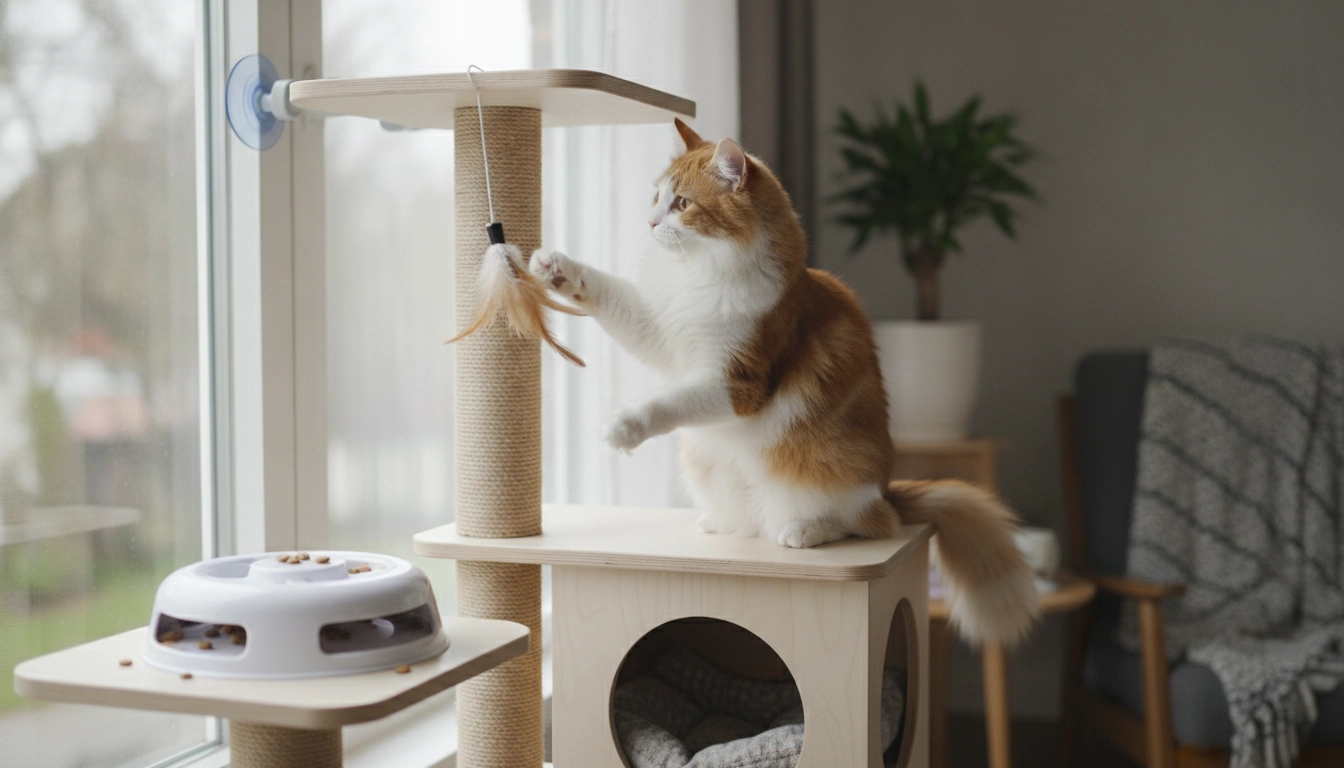
Give your cat at least two vantage points (a window perch and a cat tree or shelf) and one cozy hiding zone (a covered bed, box, or tunnel). Cats relax when they can watch the room, retreat when needed, and move between zones. If possible, place one perch near a window for bird-watching and street sounds.
Make mealtime do double duty
Instead of serving all food in a bowl, use puzzle feeders, treat balls, or a DIY scavenger hunt with small portions hidden in a few easy-to-find spots. This adds natural foraging and slows fast eating. Keep difficulty low at first, then gradually increase as your cat learns the game.
Offer solo-safe play that changes weekly
Leave out a small mix of toys that don’t require supervision—like crinkle balls, kicker toys, and lightweight mice—then rotate them every few days so they stay interesting. Avoid string, ribbon, or anything your cat could chew into long pieces while alone. If your cat enjoys it, a cat-safe “lick mat” with a thin smear of wet food can add enrichment and calm energy.
Use sound and scent strategically
Some cats enjoy a low-volume “cat TV” video or soft music, while others prefer quiet. Try both and see which leads to calmer behavior. For scent enrichment, offer a small pinch of catnip or silvervine occasionally, or rotate safe household scents (like a new cardboard box) to encourage investigation.
For more ideas on setting up activity zones, DIY toys, and simple routines that keep indoor cats busy, visit this indoor cat enrichment guide.
FAQ
How do I keep my indoor cat busy without toys?
Create vertical routes (chairs to shelves to a perch), offer a rotating supply of boxes and paper bags (handles removed), and turn meals into “find it” games by placing small portions in different safe spots.











Leave a comment