Mindful Clarity Printable Journal: Mindfulness & Gratitude

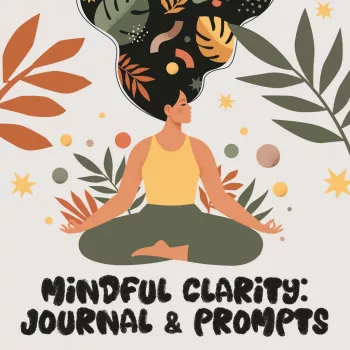
Mindful Clarity: A Printable Journal for Daily Mindfulness, Gratitude, and Reflection
Mindful Clarity is a printable journal designed to support steadier focus, calmer self-awareness, and more intentional days. It blends daily mindfulness check-ins, gratitude exercises, and reflective quotes to help turn scattered thoughts into clearer priorities—without requiring long, complicated journaling sessions. For many people, the biggest challenge isn’t knowing that mindfulness helps; it’s keeping the practice simple enough to return to on ordinary days.
Why a printable journal can make mindfulness easier to keep
A printable format makes mindfulness feel more doable because it reduces friction. Instead of starting with a blank page (or a bright screen full of distractions), you get a repeatable structure that’s ready when you are.
- Creates a simple, repeatable structure that reduces the effort of “figuring out what to write.”
- Encourages consistency by making the journal easy to start anytime—print a few pages or a full set.
- Supports small daily wins: brief reflection can still build self-awareness over time.
- Works well for people who prefer paper over apps, or who want fewer digital distractions.
- Flexible pacing: daily entries, a few times per week, or as-needed during stressful seasons.
Research-based overviews from the American Psychological Association and the NIH’s NCCIH describe mindfulness as a skill that strengthens with practice—making a quick, repeatable check-in especially valuable.
What’s inside Mindful Clarity
Mindful Clarity is built around guided pages that keep the focus practical: notice what’s happening, name what matters, and choose a small next step.
- Daily mindfulness prompts that guide attention to the present moment (body, breath, emotions, surroundings).
- Gratitude exercises that shift focus toward supportive moments, helpful people, and small positives.
- Reflective quotes paired with writing space to connect an idea to real-life situations.
- Gentle self-check questions that help identify patterns: triggers, energy levels, needs, and boundaries.
- A format intended for quick completion, helping reduce the pressure to write long entries.
Core elements and how they help
| Element | What it typically asks | What it supports |
|---|---|---|
| Mindfulness check-in | Notice sensations, thoughts, emotions without judging | Present-moment awareness and emotional regulation |
| Gratitude practice | Name specific people, moments, or resources appreciated today | Positive focus and resilience |
| Reflection prompt | Explore a challenge, choice, or relationship dynamic | Clarity, problem-solving, and values alignment |
| Quote reflection | Respond to a short quote with personal meaning and actions | Perspective shifts and intention-setting |
| Action step | Choose one small next step for today or tomorrow | Follow-through and habit-building |
To explore the full set, visit the Mindful Clarity printable journal product page.
A simple daily routine (5–10 minutes)
Consistency tends to come from making the routine small enough to fit real life. A five-minute entry still counts—and often works better than waiting for the “perfect” quiet hour.
- Start with a quick “arrive” moment: one slow breath and a brief scan of how the body feels.
- Answer one mindfulness prompt to name what is happening right now (not what “should” be happening).
- Complete a short gratitude exercise using concrete details (who, what, when, why it mattered).
- Respond to one reflective quote by writing a practical takeaway for the next 24 hours.
- Close with a single action step that is small enough to do even on a low-energy day.
If you want a helpful anchor, keep the journal near something you already do daily—coffee, brushing your teeth, or shutting down your laptop at the end of work.
Gratitude exercises that feel grounded (not forced)
Gratitude doesn’t have to be overly positive or performative. The most effective entries usually sound like real life: specific, a little messy, and honest about what helped.
- Focus on specifics: replace “I’m grateful for my family” with one moment of support or kindness and how it affected the day.
- Include neutral-to-hard days: identify “what helped me cope” rather than pretending everything felt great.
- Use variety to prevent repetition: people, skills, opportunities, comforts, nature, or personal progress.
- Add meaning: write one sentence about why the item matters, which strengthens the emotional effect.
- Turn gratitude into action occasionally: a message of thanks, a helpful gesture, or a boundary that protects well-being.
For a deeper look at why gratitude practices can support well-being, the Greater Good Science Center’s gratitude resources offer practical, research-informed context.
Using reflective quotes to create perspective
Reflective quotes can work like a mental “reset button,” especially when you’re stuck in a familiar loop—overthinking, self-criticism, or decision fatigue. The value comes from responding to the quote in your own words and applying it to one concrete situation.
- Treat a quote as a mirror: identify what it brings up (agreement, resistance, curiosity) and why.
- Translate the idea into a real situation: work stress, decision fatigue, relationships, or self-talk.
- Write a “reframe” line: a kinder or clearer way to describe what’s happening.
- Choose one behavior to test: a pause before reacting, a clearer request, or a smaller goal.
- Revisit past pages to notice growth in language, confidence, and coping strategies.
Printing and setup tips
Who this journal tends to fit best
Product snapshot
Other helpful printables (also in stock)
- Modern Etiquette Micro-Course | Printable Digital Etiquette Guide (a practical support for clearer communication and fewer social second-guesses)
- Are You Ready? Pet Adoption Decision Workbook | Printable Pet Adoption Guide (a structured way to think through a big life decision with less overwhelm)
FAQ
What is a clarity journal?
A clarity journal is designed to organize thoughts and emotions into clearer insights and next steps, often using guided questions rather than simply recording what happened. It helps you spot patterns (like triggers, needs, and energy shifts) and turn reflection into practical choices.











Leave a comment