Cat Body Language: Printable Cheat Sheet for Signals
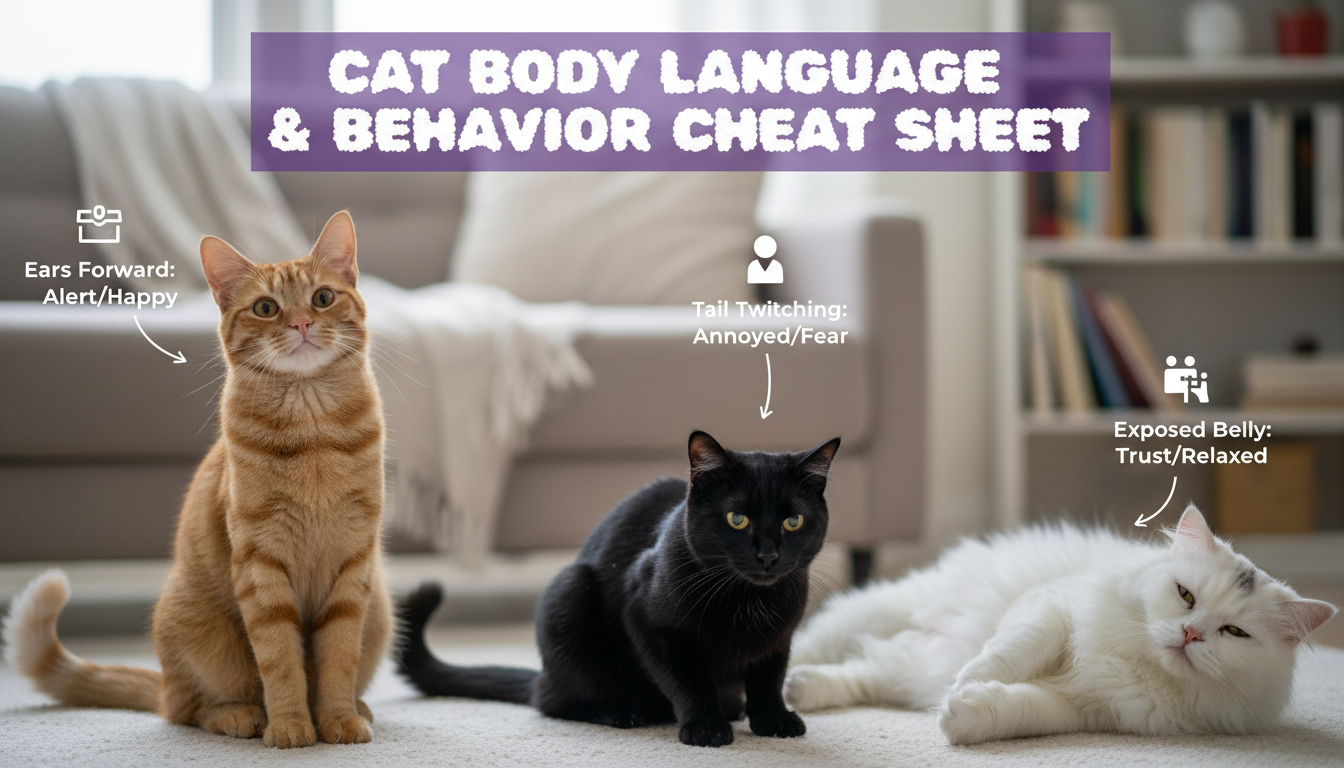
Cat Body Language & Sounds: A Printable Cheat Sheet for Everyday Cat Communication
Cats communicate with their whole body—ears, eyes, tail, posture, and voice—often in subtle combinations. When those signals are easy to miss, everyday moments like greetings, petting, play, carrier time, and multi-cat tension can escalate faster than expected. This guide organizes common cues into simple, practical categories so it’s easier to notice comfort, stress, and needs early. For quick, real-life decisions, keep a reference like the Printable Cat Body Language & Behavior Cheat Sheet on the fridge, near the carrier, or with cat-sitter notes.
How to Read Cat Communication (Context First, Then Body Parts)
Before zooming in on ears or tail position, start with what’s happening around your cat. The same posture can mean different things depending on the moment.
- Start with context: a new guest, loud appliance, feeding time, vet visit, play session, or resource guarding can completely change how a signal should be interpreted.
- Look for clusters, not single cues: tail + ears + pupils + muscle tension usually tells the story better than any one sign alone.
- Watch transitions: a relaxed cat can become overstimulated quickly, and early warnings are often subtle (a small tail twitch, a brief ear rotation, a slight stiffening).
- Respect thresholds: when discomfort shows up, pause interaction and offer space rather than “pushing through” to finish a cuddle or a grooming task.
For deeper, cat-centered handling guidance, reputable resources like the American Association of Feline Practitioners (AAFP) Cat Friendly program align well with the “notice early signals and reduce stress” approach.
Ears, Eyes, and Face: The Fastest Mood Indicators
Facial signals are often the quickest to change, which makes them especially helpful during petting, introductions, or any situation that could tip into stress.
- Ears forward/neutral: often curiosity or relaxed attention. Slightly angled can mean mild uncertainty.
- Ears sideways (“airplane ears”): commonly stress or ambivalence. Ears flattened tight can signal fear or defensive aggression.
- Slow blinks: commonly linked with relaxation and trust. A direct, hard stare can be threatening between cats.
- Pupils: depend on light and arousal. Very dilated pupils in normal lighting can indicate excitement, fear, or high arousal.
- Whiskers: neutral often means calm; forward can indicate interest/hunting; pinned back can indicate fear or irritation.
Quick Decode: Common Cat Signals at a Glance
| Signal cluster | What it often means | What to do next |
|---|---|---|
| Ears forward, soft eyes, loose body, tail gently upright | Friendly/comfortable | Offer calm interaction; reward gentle behaviors |
| Airplane ears, wide pupils, low crouch, tail tucked or wrapped | Uncertain or stressed | Reduce noise/handling; give a safe retreat |
| Ears flattened, stiff body, staring, growl/hiss | Defensive warning | Stop approach; increase distance; avoid cornering |
| Tail flicking fast, skin twitching, sudden head turns toward hand | Overstimulation | Pause petting; switch to low-intensity play or space |
| Forward whiskers, focused eyes, crouch, silent stalk | Hunt/play mode | Provide wand/toy; avoid using hands as toys |
Tail and Body Posture: Comfort vs. Alarm
The tail and overall posture often show whether a cat feels safe enough to engage—or whether the cat is preparing to retreat, defend, or explode into frantic motion.
- Tail upright: often a friendly greeting. A small hook at the tip can signal extra warmth or interest.
- Tail low: can indicate caution. Tail tucked tightly can indicate fear or pain.
- Puffed tail: signals high arousal (fear or excitement). Pair it with body position and environment to interpret accurately.
- Loose, stretched posture: (lying on side, relaxed limbs) often indicates comfort. A tense “loaf” with tight muscles can indicate vigilance.
- Belly-up rolling: can be trust or a playful invitation to engage, but it isn’t always consent to touch the belly.
Meows, Purrs, Chirps, and Growls: What Sounds Commonly Mean
Vocalizations are useful, but they’re easiest to decode when paired with body language and timing.
For additional behavior basics and humane handling tips, see International Cat Care’s guidance on cat behavior.
Petting, Play, and Overstimulation: Preventing the “Sudden Bite”
Multi-Cat Dynamics: Friendly vs. Tense Interactions
If you’re planning a new addition to the household, the Pet Adoption Decision Workbook can help structure decisions around space, time, budget, and realistic expectations—factors that directly affect stress and behavior once a pet comes home.
Using a Printable Cheat Sheet at Home (Fridge, Carrier, Cat-Sitter Notes)
For a ready-to-print reference that organizes these cues in one place, use the Cat Body Language & Behavior Cheat Sheet as a quick guide for everyday handling, introductions, and carrier time.
FAQ
Why does a cat purr when it seems stressed or at the vet?
Purring can be a self-soothing behavior as well as a sign of comfort, so it’s important to check body tension, ear position, pupils, and the situation. If purring appears alongside stiffness, hiding, or other signs of pain or fear—especially if it’s a sudden change—contact a veterinarian.
Does showing the belly mean a cat wants belly rubs?
Belly-up often signals trust, relaxation, or a playful posture, but it doesn’t automatically mean the cat wants belly contact. Start with safer areas like cheeks and head, then use a pause-and-see consent test to confirm what your cat actually enjoys.
What are early signs a cat is getting overstimulated during petting?
Common early cues include tail flicking, twitching skin, ears rotating back, tense muscles, sudden head turns toward your hand, and dilated pupils. Pause petting immediately and let your cat decide whether to continue; switching to a toy-based activity can also help.











Leave a comment