4-Week Puppy Training Plan: Potty, Commands & Socializing
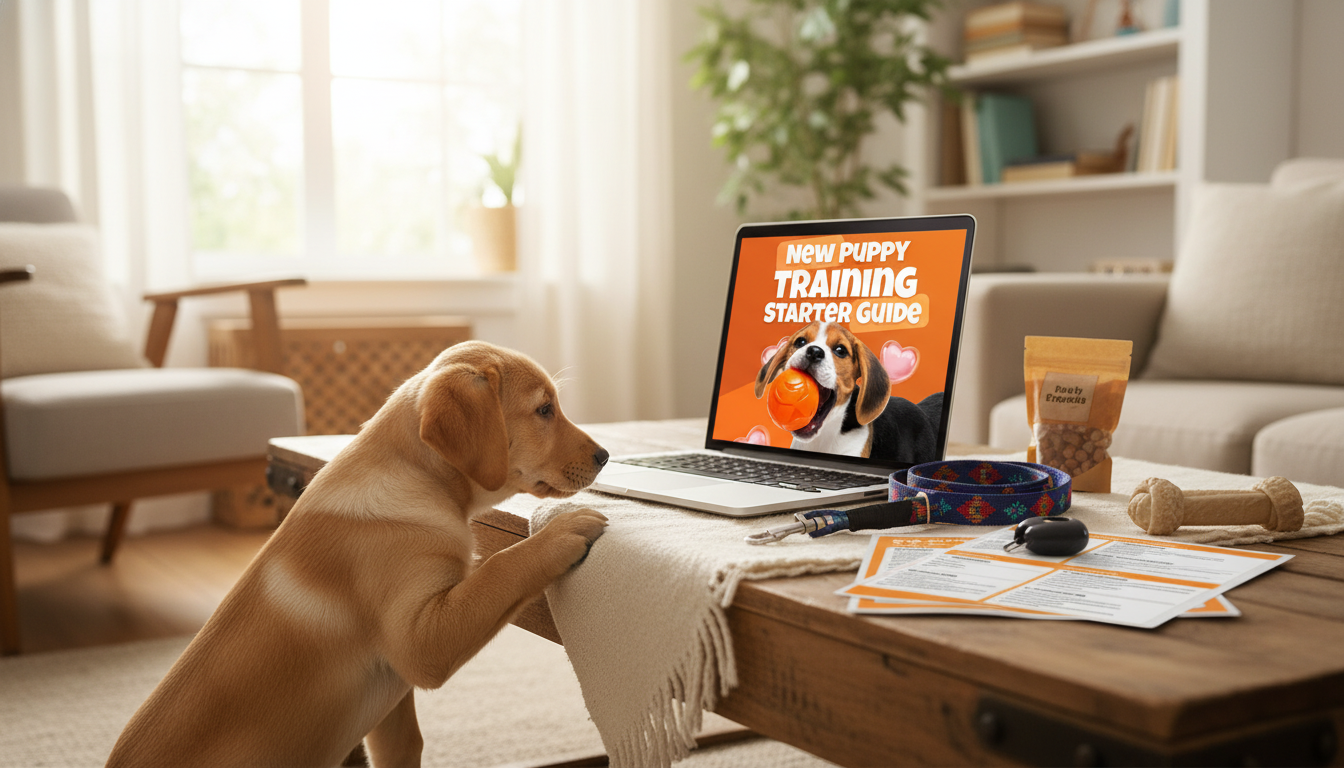
New Puppy Training Starter Guide: A 4-Week Routine for House-Training, Basic Commands, and Socialization
A new puppy learns fastest with consistent routines, clear cues, and short, frequent practice sessions. This 4-week plan pairs house-training with foundational skills (name response, recall, sit, down, leave it), early socialization, and calm household manners—plus a simple printable-style structure to keep everyone in the home on the same page.
What to Set Up Before Training Starts
- Choose a confinement plan: a crate + exercise pen combo is ideal, but a small puppy-proofed room can work. The goal is to prevent rehearsing accidents and chewing.
- Pick high-value treats: soft, pea-sized rewards and a treat pouch help you reinforce quickly. Aim to reward within 1–2 seconds of the behavior.
- Decide on cues now: one potty phrase, one marker word (“Yes”) or clicker, and one consistent door/potty spot routine.
- Create a predictable day: potty breaks, meals, naps, play, and training in a repeatable rhythm helps learning “stick.”
- Gather essentials: crate mat/towel, chew variety (soft rubber + durable), enzymatic cleaner, harness, lightweight leash, and an ID tag.
House-Training: The Fastest Path to Fewer Accidents
House-training moves quickly when prevention and timing do most of the work. The puppy doesn’t need to “learn not to go inside” as much as they need lots of successful reps going outside—plus a home setup that blocks avoidable mistakes.
- Start with a tight schedule: after waking, after eating/drinking, after play, after training, and every 30–60 minutes while awake (adjust based on age and progress).
- Supervise or confine: if you can’t watch, the puppy goes to the crate/pen or safe room. Prevention is the foundation.
- Reward outdoors immediately: the treat happens at the potty spot (not after coming back inside).
- Learn the signals: sudden sniffing, circling, wandering away, abruptly stopping play, or heading to corners.
- Handle mistakes cleanly: interrupt gently (“oops”), take them outside, and reward if they finish. Clean indoor spots with enzymatic cleaner so odors don’t invite repeats.
- Night plan: last potty right before bed; young puppies may need a quiet nighttime break—leashed, boring, and straight back to bed.
| Time/Trigger | What to Do | Goal |
|---|---|---|
| Wake up | Carry or leash to potty spot; reward immediately after | Build a reliable morning routine |
| After meals | Potty within 5–20 minutes; then short play | Prevent post-meal accidents |
| After play/training | Potty break; then calm chew time | Reduce excitement accidents |
| Before naps | Potty + settle in crate/pen | Teach calm transitions |
| Overnight (if needed) | Quiet potty trip, no play, back to bed | Protect sleep habits |
The 4-Week Training Routine (Short Sessions, Big Progress)
Think “micro-sessions”: 3–6 tiny practices a day (1–5 minutes) beat a single long session. Stop while your puppy is still winning—ending on success keeps enthusiasm high.
Week 1: Bonding + Basics
- Name response (say it once, then reward eye contact)
- Introduce your marker (“Yes”) or clicker
- Gentle handling practice: ears, paws, mouth, collar grabs
- Crate comfort: feed meals in/near the crate, short door-closed moments
- Calm leash exposure indoors (walk a few steps, treat, release)
Week 2: Foundation Cues
- Sit and down with a lure, then begin fading the lure into a hand signal
- Gentle “take it” and early “drop it” trades
- Recall games indoors: short distance, exciting reward, then back to fun
Week 3: Impulse Control
- Leave it (easy versions first), wait at doors, and polite greeting reps
- Longer settle on a mat with a chew
- Short neighborhood observation outings as age/vet appropriate
Week 4: Real-Life Proofing
- Practice cues in new rooms, yard, driveway, and quiet outdoor spaces
- Add mild distractions: a toy on the ground, someone walking by, low-level noises
- Begin short alone-time routines to reduce separation stress later
Core Commands to Prioritize (and Why They Matter)
Socialization That Builds Confidence (Not Overwhelm)
For deeper context on timing and best practices, see the American Veterinary Society of Animal Behavior (AVSAB) position statements and the Humane Society guide to house-training.
Biting, Chewing, and Jumping: Redirecting Puppy Behavior
Printable Plans: Keeping Training Consistent for the Whole Household
Recommended Printables (In Stock)
- New Puppy Training Starter Guide (Printable eBook) — a structured 4-week routine with house-training, core cues, and socialization planning.
- Are You Ready? Pet Adoption Decision Workbook — helpful for aligning expectations, responsibilities, and daily logistics before (and after) bringing a pet home.
When to Get Extra Help
FAQ
How often should a new puppy go outside for potty breaks?
Plan on every 30–60 minutes while your puppy is awake at first, plus always after waking up, after meals/drinking, and after play or training. As accidents decrease and outdoor success becomes consistent, you can gradually extend the interval.
What are the first commands to teach a puppy?
Start with name response and a marker word (“Yes”), then teach recall games, sit, down, leave it, drop it, and a settle/place routine. Keep sessions very short and reward the exact behaviors you want repeated.
How do you socialize a puppy safely before all vaccines are complete?
Follow your veterinarian’s guidance and focus on controlled exposures: observe at a distance, use a carrier or blanket when needed, and meet only healthy, known dogs in safe environments. Pair new sights and sounds with treats, and never force interactions if your puppy seems unsure.












Leave a comment