Homemade Stimulating Cat Toys: 4 Easy DIY Ideas
How do you make homemade stimulating toys for cats?
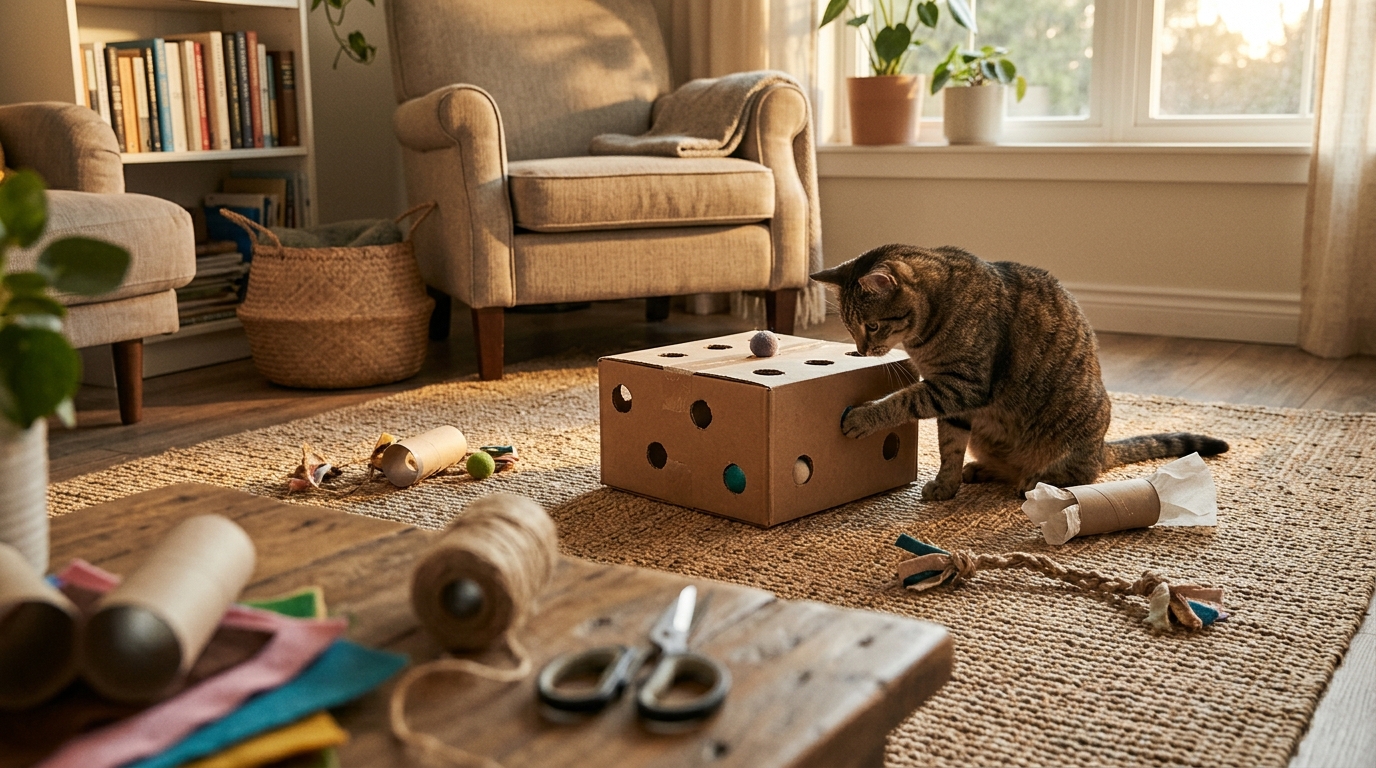
Homemade stimulating cat toys are easiest when they mimic three things cats love: hunting, batting, and foraging. Start with safe household materials (paper, cardboard, fabric) and keep everything simple, sturdy, and supervised until you know your cat’s style.
1) Cardboard “forage box” puzzle
Grab a shallow box lid, crumple plain paper into loose balls, and sprinkle a few treats or kibbles between the paper. Your cat has to sniff, paw, and dig to “hunt” the rewards. For extra challenge, fold a few paper tubes (from toilet paper rolls) into the box as tunnels and hide treats inside them.
2) Sock “kicker” toy for bunny-kicks
Fill a clean sock with strips of old T-shirt fabric or crinkled paper (avoid foam and anything that sheds). Tie a tight knot at the open end. Many cats love hugging and kicking this toy with their back feet. If your cat is a chewer, skip strings, ribbons, or loose parts that could be swallowed.
3) Paper bag ambush station
Use a plain paper grocery bag with handles removed. Lay it on its side and lightly crumple it so it holds shape. Cats often pounce, hide, and swat from inside. Add a few paper balls to increase the sound and movement.
4) DIY wand teaser (safer version)
Tie a sturdy strip of fleece (not yarn) to the end of a wooden dowel or a thick pencil. Drag it in short bursts, then pause so your cat can “catch” it. Put wand toys away after play so the string-like material isn’t left unsupervised.
Safety checks that matter
Avoid small hard pieces (buttons, beads), elastic bands, and tinsel. Trim any fraying fabric, remove staples/tape from cardboard, and replace toys once they start shedding or tearing.
For more room-by-room ideas and play routines that keep indoor cats busy, visit this indoor cat enrichment guide.
FAQ
How can I tell if my cat is bored indoors?
Common signs include increased meowing, attention-seeking, knocking objects over, overgrooming, or repeated pacing. Adding short, scheduled play sessions and simple foraging games often helps quickly.












Leave a comment