Cat Enrichment at Home: 5 Easy Ways to Keep Them Busy
How do I create enrichment for my cat?
Cat enrichment is easiest when it fits your home and your cat’s natural instincts: hunt, climb, scratch, and explore. Start by mixing three types of stimulation—food, movement, and novelty—so your cat gets both mental and physical outlets without needing constant attention.
1) Build a simple “hunt and eat” routine
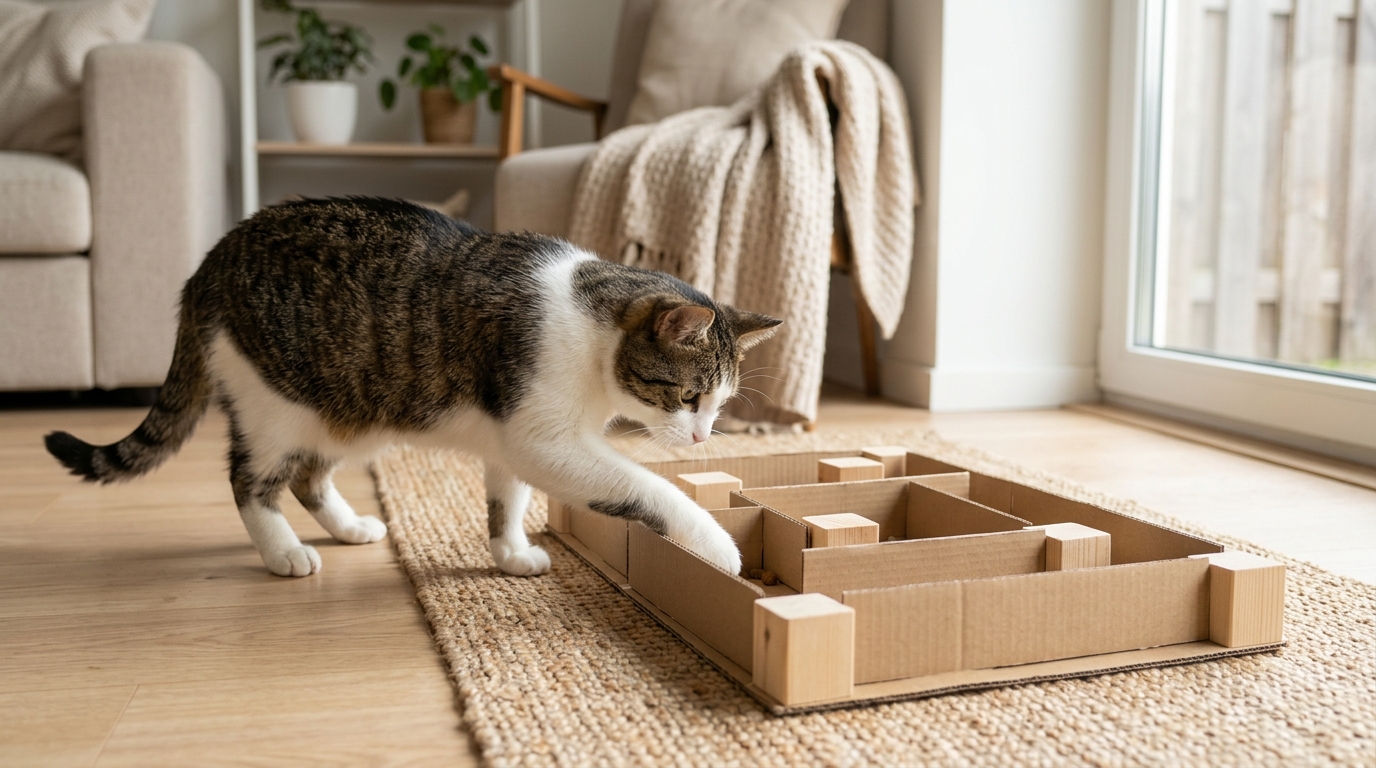
Instead of serving every meal in a bowl, turn part of it into a search game. Hide small portions in a few predictable spots (behind a chair leg, near a cat tree base), or use a puzzle feeder. Rotate the hiding locations so your cat stays curious and engaged.
2) Create vertical territory
Most indoor cats relax more when they can get up high. Add a cat tree, a window perch, or a sturdy shelf path. Place one “lookout” near a window for bird-watching and another in a quieter area for decompression.
3) Offer scratch options in multiple zones
Provide at least one vertical scratcher and one horizontal scratcher. Place them where your cat already scratches—often near sleep spots or room transitions—so scratching becomes a satisfying habit instead of a furniture battle.
4) Rotate toys like a mini “toy library”
Leave out only a few toys at a time and swap them every few days. A wand toy for interactive play, a kicker toy for wrestling, and a small ball or spring for solo batting covers most play styles. Short, high-energy play sessions (5–10 minutes) are often more effective than long ones.
5) Add safe novelty
Bring in a new cardboard box, a paper bag with handles removed, or a blanket “tunnel.” Even small changes—moving a perch, adding a new texture mat—can refresh your cat’s environment.
For more DIY ideas, home “cat zones,” and easy play routines, visit the full guide: https://unmatchedhitsarena.shop/guide-indoor-cat-enrichment-diy-toys-play-routines-home-zones/.
FAQ
How often should I play with my cat each day?
Aim for 1–3 short sessions daily, especially morning and evening. Adjust based on age and energy level—kittens often need more frequent bursts, while seniors may prefer gentler play.








Leave a comment