Indoor Cat Enrichment: DIY Toys, Routines & Home Zones
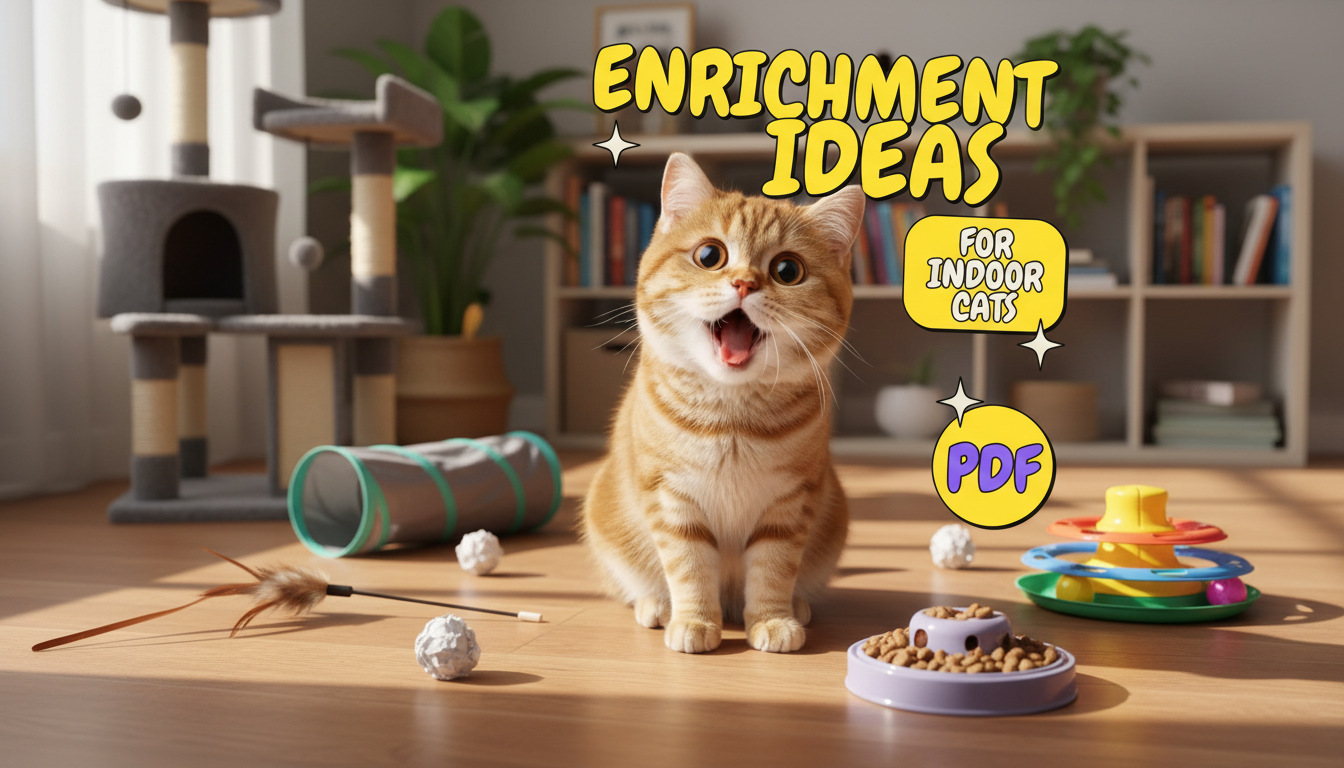
Enrichment Ideas for Indoor Cats: DIY Toys, Play Routines, and a Cat-Friendly Home
Indoor cats thrive when their day includes hunting-style play, choice of spaces, opportunities to climb and scratch, and small challenges that use their senses. A simple routine—plus a few low-cost DIY activities—can reduce boredom behaviors (night zoomies, furniture scratching, overgrooming) while supporting healthy movement and confidence. For more guidance, see The Best Indoor Cat Enrichment Ideas: Toys, Puzzles, and More.
What “enrichment” means for an indoor cat
Enrichment is less about “more stuff” and more about meeting a cat’s built-in needs in a home setting. Think of it as helping your cat do normal cat things safely and daily. For further reading, see Feline DIY Enrichment – ASPCA.
- Meet core needs: predatory play (stalk–chase–pounce), scratching, climbing, hiding, and resting in safe spots.
- Add choice and control: multiple routes through the home, more than one resting place, and the ability to opt out.
- Rotate novelty: small changes (a new box, moved perch, different toy) often matter more than buying more items.
- Watch the cat’s signals: ears back, twitching tail, hiding, or sudden swats can mean the activity is too intense or too long.
For deeper guidance on feline environmental needs, the AAFP/ISFM Feline Environmental Needs Guidelines is a strong, vet-informed reference.
Quick home setup: the “three zones” that prevent boredom
Before adding toys, set up the home so your cat has a few reliable “yes” spaces. A good layout reduces frustration and helps cats self-regulate.
1) Vertical zone
Provide a high observation spot away from heavy foot traffic. A cat tree, a sturdy chair by a window, or a stable shelf gives your cat a place to watch, nap, and decompress.
2) Scratch zone
Aim for at least one vertical and one horizontal scratcher. Place one near a favorite nap area (cats often scratch after waking) and another near the main living space where your cat already wants to mark.
3) Calm zone
Create a covered bed, a box “cave,” or a carrier left open as a safe retreat. Keep it away from loud appliances and busy hallways.
Resource spacing
Separate food, water, and litter when possible, and consider more than one litter area. This spacing can lower stress and reduce “resource guarding,” especially in multi-cat homes.
DIY toy ideas that mimic hunting (fast, safe, and cheap)
The best toys tend to act like prey: they dart, hide, rustle, or “escape.” Keep sessions short and store risky items out of reach between plays.
- Paper “prey” toss: crumple kraft paper into small balls and toss down a hallway for short sprints.
- Toilet-roll puzzle: fold the ends, cut a few small holes, add a small portion of treats or kibble, and let your cat bat it to release food.
- Sock kicker: fill a clean sock with fabric scraps, tie securely, and use for supervised bunny-kicking (remove if threads loosen).
- Box maze: connect two boxes with a doorway, then add paper strips or a ping-pong ball for stalking and ambush play.
- String/ribbon caution: wand toys are excellent for interactive play, but loose strings should be stored between sessions to prevent ingestion.
If you want a ready-to-print routine you can stick on the fridge, see the Printable Cat Enrichment Guide with DIY toys and play routines.
Play routines that work on busy days
Consistency beats intensity. Many cats do better with multiple mini “hunts” than one long session that ends when they’re already overstimulated.
Printable weekly enrichment routine (mix-and-match)
| Day | 5-minute active play | Food puzzle/foraging | Home change (novelty) |
|---|---|---|---|
| Mon | Wand toy: slow stalk → short sprint | Toilet-roll puzzle (small portion) | Move a scratcher to a new spot |
| Tue | Hallway paper-ball toss | Scatter feeding on a mat | Add a box “cave” with a towel |
| Wed | Laser play (finish with a toy catch) | Treats hidden in 3 spots | Open a new window perch view |
| Thu | Feather teaser: jumps + low sweeps | Lick mat or wet food on plate | Rotate in a different toy bin |
| Fri | Kicker play + short wand session | DIY bottle roller (holes + kibble) | Rearrange a tunnel/blanket fort |
| Sat | “Ambush” game around furniture | Puzzle feeder (easy setting) | Cat-safe plant placement check |
| Sun | Gentle chase with soft toy | Sniff game: treats in paper cups | Quiet reset: wash bedding, refresh calm zone |
Scent, sound, and sight: enrichment beyond toys
The ASPCA’s environmental enrichment guidance also includes practical ideas and behavior notes for common boredom issues.
Enrichment for multi-cat homes (reduce tension and competition)
If you’re building a new routine (or adding a new pet), the Pet Adoption Decision Workbook for planning routines and home setup can help map resources, schedules, and “cat zones” ahead of time.
Safety checklist and when to adjust the plan
Printable guide: an easy way to stay consistent
FAQ
How much play time does an indoor cat need each day?
Many indoor cats do well with about 10–20 minutes total per day, split into multiple short sessions. Adjust up for high-energy cats and down (with gentler pacing) for seniors or cats with mobility limits.
What are safe DIY enrichment toys for cats?
Safe options include paper balls, cardboard boxes/box mazes, toilet-roll treat puzzles, and treats hidden in paper cups. Avoid unsupervised string/ribbon toys, remove small breakable pieces, and discard anything that starts shedding threads or sharp edges.
How can enrichment help with nighttime zoomies?
A focused evening “hunt” session followed by a small meal supports the natural hunt → eat → groom → sleep cycle and can reduce late-night bursts. Keeping morning routines predictable also helps some cats settle into steadier daily rhythms.











Leave a comment