Confident Kids Bundle (Ages 3-5): Calm & Confidence Tools
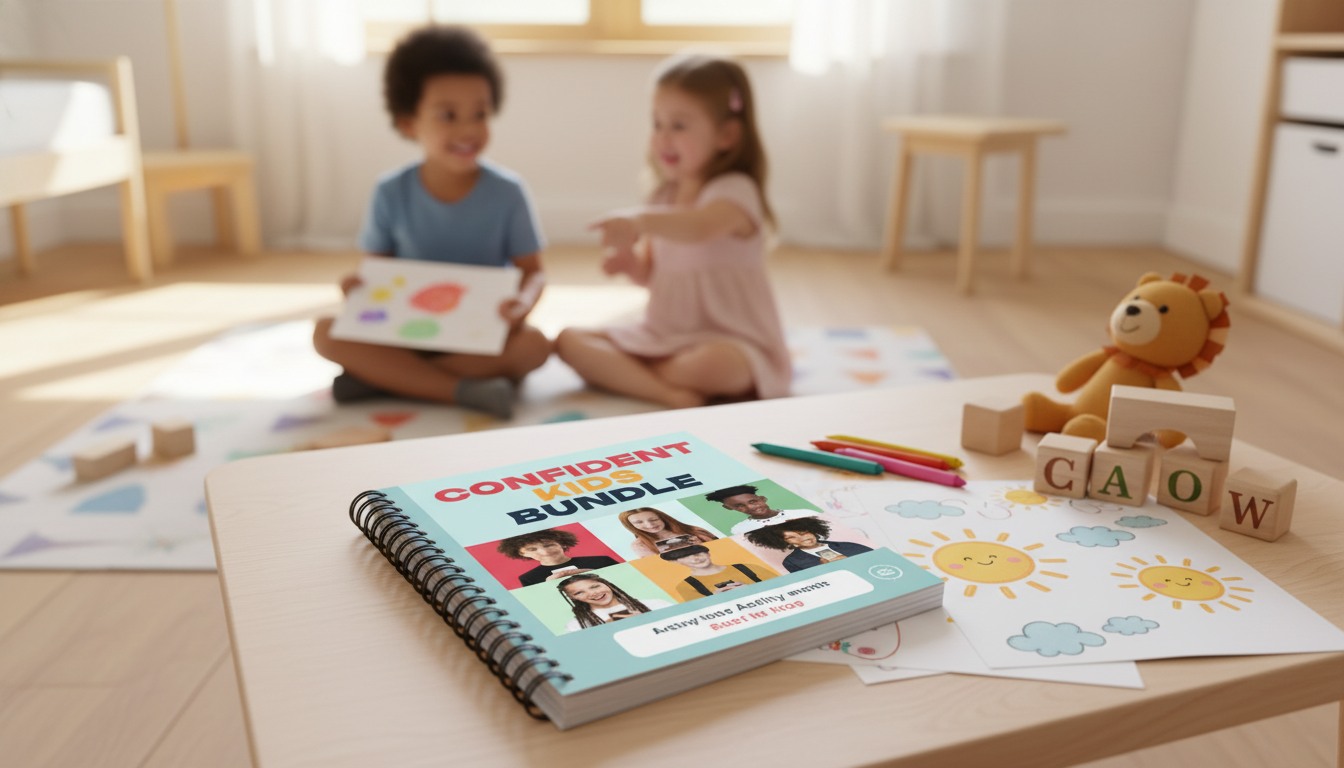
Confident Kids Bundle: Simple Tools to Build Emotional Strength and Healthy Self-Esteem (Ages 3–5)
Big feelings, frequent meltdowns, and constant reassurance are common at ages 3–5—but they’re also opportunities to teach emotional skills that last. The Confident Kids Bundle combines a parenting guide, age-appropriate self-esteem activities, and an emotional intelligence checklist to help caregivers build routines that support confidence, calm, and kinder communication at home.
Why emotional strength matters most in the preschool years
Between ages 3–5, kids are learning to do hard things with a still-developing brain: wait their turn, share space, handle “no,” and recover from disappointment. This is a high-growth window for naming feelings, practicing patience, and learning the social rules that make preschool and kindergarten feel safer.
Emotional strength isn’t “never crying.” It’s being able to bounce back, ask for help, and try again—even after getting frustrated or overwhelmed. Over time, healthy self-esteem grows from repeated experiences of being understood, capable, and safe to make mistakes.
That’s why consistent language and simple routines usually work better than long lectures or punishments. When a child is dysregulated, they don’t need more words—they need structure, calm, and a predictable next step. For more on typical preschool social-emotional development, the American Academy of Pediatrics offers helpful age-based guidance.
What’s inside the Confident Kids Bundle (3-in-1) and how each piece helps
The Confident Kids Bundle: Nurturing Emotional Strength (3-in-1) is designed to support both daily prevention (steady routines) and in-the-moment support (simple scripts and quick references).
- Parenting guide: practical scripts, mindset shifts, and strategies for responding to big feelings without shaming or rescuing.
- Self-esteem activities (ages 3–5): play-based prompts that reinforce autonomy, effort, and positive self-talk.
- Emotional intelligence checklist: a quick reference for tracking skills like recognizing emotions, calming down, and showing empathy.
Bundle components at a glance
| Bundle item | Best used for | When to use it | Example outcomes to look for |
|---|---|---|---|
| Parenting Guide | Caregiver responses and boundaries | During tough moments and after calm-down | Less escalation; clearer limits; more cooperation |
| Self-Esteem Activities (Ages 3–5) | Confidence through play and practice | Short daily or 2–3x/week activity time | More trying; less fear of mistakes; stronger independence |
| Emotional Intelligence Checklist | Tracking and noticing growth | Weekly check-in or after challenging weeks | Better emotion naming; more self-soothing; improved empathy |
A realistic 10–15 minute routine that fits busy days
Preschoolers learn through repetition, not one perfect conversation. A short routine—used consistently—helps kids know what to expect when emotions spike.
- Step 1: Name the feeling (30 seconds). Model simple labels: “mad,” “sad,” “scared,” “excited.” If they can’t name it, you can: “Your face looks mad; your body looks tight.”
- Step 2: Body reset (2–3 minutes). Pick one calming action: belly breaths, squeezing hands, a wall push, or a quiet corner.
- Step 3: Choice + boundary (1 minute). Offer two acceptable options while holding the limit: “You can stomp on the mat or squeeze your pillow. The toys stay on the shelf.”
- Step 4: Confidence practice (5–8 minutes). Use one self-esteem activity focused on effort, trying again, or kindness.
- Step 5: Quick review (1 minute). Ask: “What helped your body feel better?” This builds self-awareness without pressure.
If you want additional structured caregiver tools, the CDC’s Essentials for Parenting also shares practical approaches for preschool behavior and regulation.
Self-esteem boosters that work for ages 3–5
- Praise the process, not the person. Try: “You kept trying different ways,” “You practiced,” or “You asked for help.” This builds durable confidence.
- Give helpful responsibilities. Small jobs create capability and belonging: wipe the table, match socks, water a plant, or feed a pet with supervision.
- Normalize mistakes. Use calm phrases like “Mistakes help brains grow,” then model trying again.
- Offer guided choices. Too many options can overwhelm; two options support autonomy and reduce power struggles.
- Use “yet” language. “You can’t do it yet” signals that skills grow with practice.
- Limit comparison talk. Focus on personal progress rather than being “the best,” which can create pressure and avoidance.
For caregivers who want a simple way to reflect on their own stress patterns (so calmer responses come easier), Mindful Clarity: Journal & Prompts pairs well with a home routine built around consistency and repair.
Emotional intelligence skills to build (and easy ways to practice them)
Emotional intelligence doesn’t require complicated lessons. It grows through tiny, frequent reps—especially through play, stories, and everyday transitions. CASEL’s overview of social and emotional learning highlights core competencies that start developing early; see CASEL — Fundamentals of SEL.
Using the checklist to notice progress (without turning it into a test)
Who this bundle is best for (and when to start)
Confident Kids Bundle details and quick buying notes
If you’re also working on everyday manners and kinder communication as kids grow, the Modern Etiquette Micro-Course can complement your family’s “practice and repair” mindset with simple, practical guidelines.
FAQ
What are signs of low self-esteem in kids?
For ages 3–5, signs can include frequent “I can’t,” avoiding new tasks, intense frustration with mistakes, excessive reassurance-seeking, negative self-talk, clinginess in social settings, or giving up quickly. Occasional moments are normal, but it’s worth paying attention to patterns that persist and interfere with daily routines, play, or learning.










Leave a comment